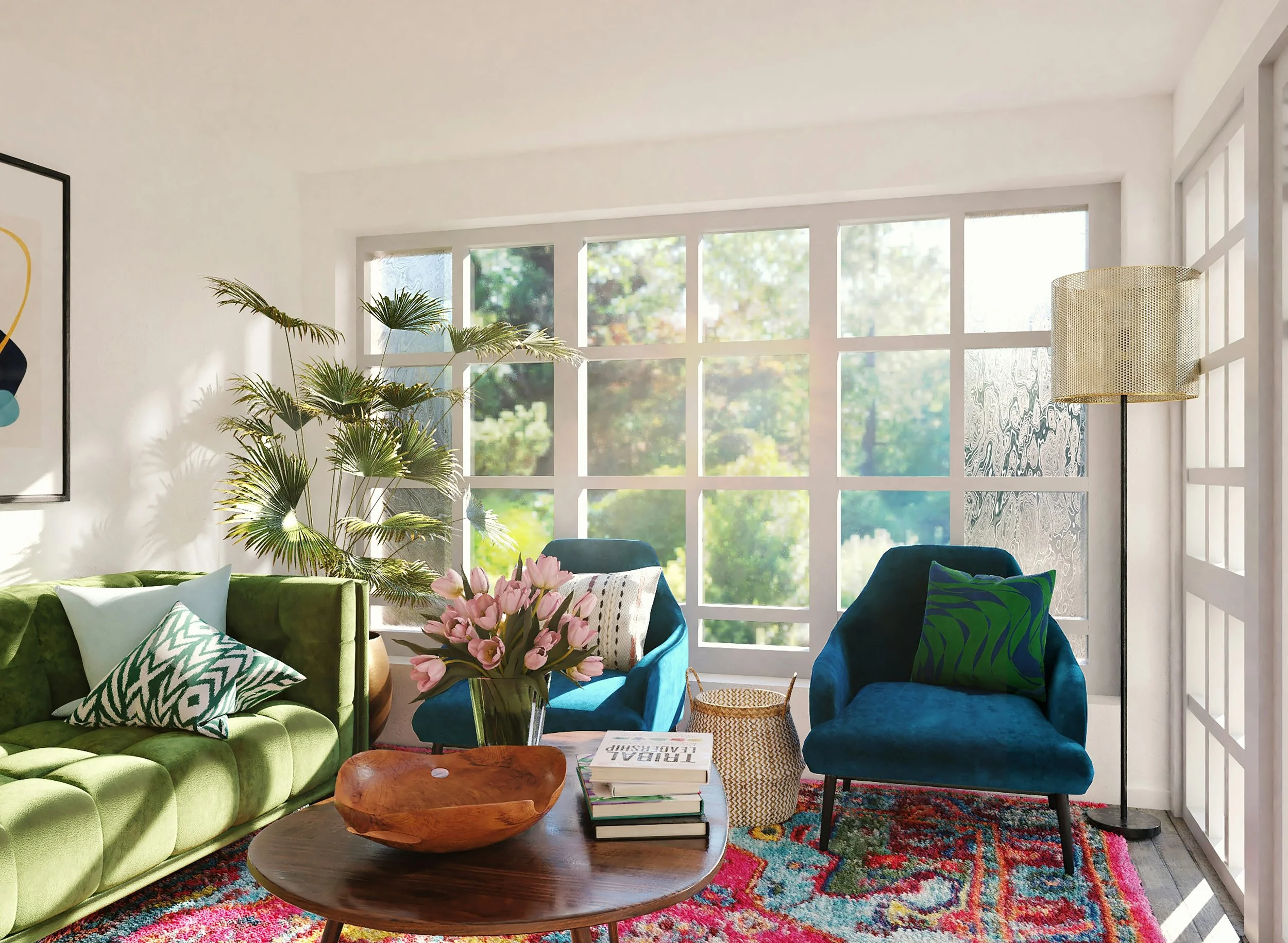
Photo by Spacejoy on Unsplash
A room that truly rests you is less about perfect decor and more about how your nervous system feels when you’re in it. Think of design as choreography for your body and mind, not just an arrangement of objects.
Start with how you want to feel
Before moving anything, define the experience you want the room to create.
Choose 3 words: for example, soft, unhurried, grounded; or clear, cozy, restored.
Ask: What do I want to do here when I feel rested? Read? Nap? Daydream? Gently create?
Let those answers guide every decision - if an item or layout fights those feelings, it’s a candidate to change or remove.
Clear visual and mental noise
Rest is hard in a space that keeps asking for your attention.
Remove ‘nagging’ items: piles of unfinished work, bills, laundry baskets, tech clutter. Store them in another zone or behind closed doors.
Choose one visual focal point (a window, artwork, plant, lamp) and calm everything around it: fewer small objects, less pattern competition.
Contain necessities in closed baskets or drawers so the room reads as simple at a glance, even if storage hides the real life.
Light, sound, and temperature
Your nervous system responds to the environment long before your thoughts do.
Light
Aim for layered, low‑contrast lighting: one warm lamp at eye level, maybe a second softer source, rather than a single bright overhead light.
Use warm bulbs and dimmers if possible; avoid harsh blue‑white light in rest spaces.
Sound
Soften echoes with textiles: rugs, curtains, cushions, fabric headboard or throw.
Decide what your ‘rest sound’ is here: quiet, white noise, rainfall, gentle music - and make it easy to turn on with one or two taps.
Temperature
Keep the room slightly on the cool side but add warmth through blankets and socks; being a bit cool with the option to layer feels more restful than being hot with no escape.
Furniture that supports rest, not hustle
Design the room so your body knows what it’s here to do.
Choose seating first: a chair, sofa, or bed that invites soft posture - head supported, hips and knees comfortable, feet able to rest on something.
Avoid turning every surface into a work surface; if this room must be multipurpose, create one clearly defined work zone and one clearly defined rest zone.
Position seating toward your calming focal point (window, art, plant), not toward a stack of chores or a cluttered shelf.
Manage technology with intention
Tech isn’t forbidden, but it needs boundaries if the room is meant to restore you.
Decide: Is this a low‑tech or no‑work room? If so, keep laptops and paperwork out entirely.
If screens are allowed, create rituals: a specific time window, a lower brightness setting, and a rule that devices live in one spot (not scattered across the room).
Keep chargers and cables contained so they don’t visually dominate; this helps the room feel less ‘plugged in’ even when devices are present.
Build in rest rituals
A restful room works best when it’s linked to specific, repeatable actions.
Create a ‘start rest’ sequence: for example, turn on one lamp, pull down the shades, place your phone in a basket, put a blanket over your legs.
Keep 1-3 low effort activities within reach that truly restore you: a book, a journal, simple art supplies, a puzzle, or nothing at all.
Use scent or texture as cues: a specific candle or essential oil, a favorite blanket, a particular pillow that only lives in this room.
Make maintenance easy, not perfect
A room that rests you needs to be easy to reset, or it will become another chore.
Give every item a simple ‘home’: basket for throws, tray for remotes and small objects, hook for robe or sweater.
Design a 3-5 minute reset ritual you can do most days: straighten pillows, fold one blanket, put stray items in their homes, turn off lights with intention.
Aim for ‘good enough to exhale,’ not magazine‑ready; the question is always: Do I feel more settled in here after these few minutes?
When you step into the room, your body should gradually learn: this is where the pace drops, the demands soften, and nothing urgent is expected of you. If you design for that feeling first, the aesthetics will follow - and the space will actually rest you, not just look like it should.