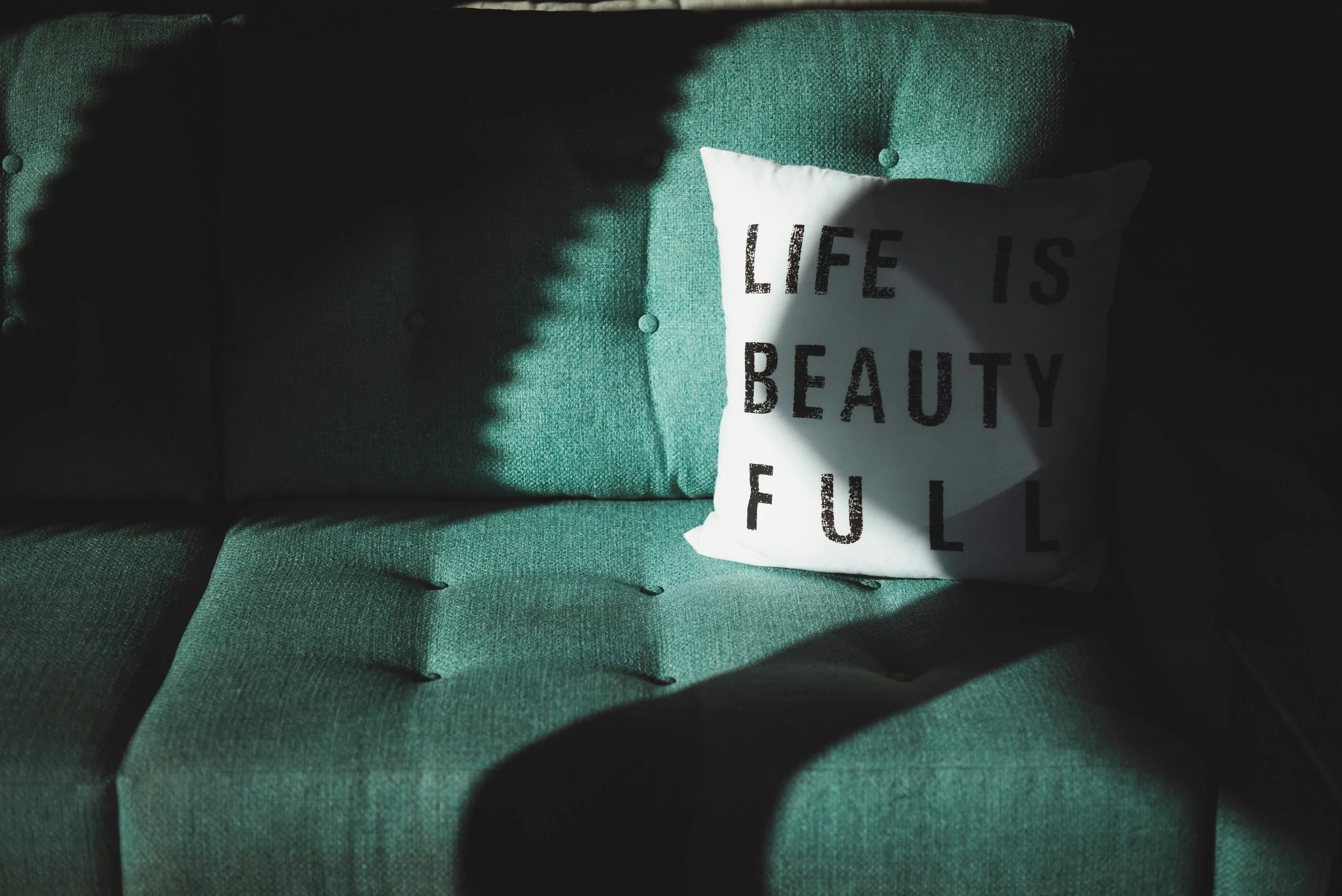
Photo by Masaaki Komori from Unsplash
There is a particular kind of calm that comes from living with objects that are both useful and beautiful - things you can handle, wash, sit on, drink from, and wear down with time. Functional beauty invites the body into the experience of art instead of keeping it at a polite distance.
What happened
Most people are taught to treat art as something fragile and separate.
Paintings live behind glass. Sculptures sit on pedestals. ‘Nice things’ go in cabinets or on high shelves, safe from fingerprints and everyday life. At home, there might be one ‘good’ mug that rarely gets used, a special blanket kept for guests, or a handmade bowl that is admired but never touched. Beauty becomes something to look at, not something to live with.
Then something shifts. A handmade mug becomes the daily coffee vessel. A woven textile moves from the wall to the back of a chair. A beautiful wooden spoon is used in every soup, slowly burnished by oil and time. The pleasure of these objects is no longer just visual; it is in the weight in the hand, the curve of a handle, the way glaze feels against the lip. Art becomes part of the nervous system’s sense of safety and delight, not just part of the room’s decor.
How I slowed it down
Chose a few beautiful, functional objects - a mug, a bowl, a blanket, a tray - and put them into daily circulation instead of saving them.
Gave myself permission for these pieces to show wear: chips, softened edges, slight fading as signs of a life lived with them, not damage to be feared.
Paid attention while using them: the warmth of a drink in a handmade cup, the texture of a carved handle, the way a patterned blanket changes the feel of a chair.
Reduced the number of purely decorative pieces so that more of what I owned could be touched, moved, and used.
Let the home be arranged around reachable beauty: things at hand level, not locked away.
What this space is teaching me
Living with art you can touch changes the way a room feels - and the way you feel in it.
Functional beauty tells the body that the space is meant to be lived in, not just admired. A handmade bowl on the table invites you to hold it. A well designed chair invites you to sit and stay. A textile draped over the arm of a sofa invites you to pull it over your legs. These invitations matter: they turn the room from a backdrop into a relationship.
There is also a subtle mindset shift. When beauty is only for display, home can start to feel like a museum, and you become the potential source of damage. When beauty is built into everyday objects, you become a collaborator in their story. Every stir of the spoon, every morning with the same mug, every evening under the same blanket deepens the patina - not just of the object, but of your own routines.
Functional beauty also supports slowness. When you enjoy the feel of the objects you use, you are more likely to pause: to really stir the pot, to savor a sip, to sit a bit longer. The ordinary acts of eating, sitting, washing, and resting gain a layer of quiet pleasure that doesn’t depend on buying anything new - only on choosing what you already have with more care.
Why functional beauty matters for the nervous system
Touchable art is not only aesthetically pleasing; it is regulating.
Texture and weight give the hands something real to hold, which can be grounding when the mind is scattered.
Repeated use creates familiar sensations that become comforting patterns: the same cup, the same blanket, the same plate, anchoring your mornings and evenings.
Beauty in objects you touch daily sends a subtle message: you are worth surrounding with care, even in the smallest moments.
Instead of seeking escape from everyday life, functional beauty makes everyday life itself more worth inhabiting.
Try this in your space
Today, experiment with bringing one beautiful object out of ‘display mode’ and into daily life.
Choose something you love but rarely touch: a handmade cup, a ceramic bowl, a woven textile, a crafted tray, a piece of pottery.
Put it where you will naturally reach for it: by the kettle, on the table, over the back of a chair, on your nightstand.
Use it once a day for a week. Notice how it feels in your hands, how it changes the mood of the moment, and how your relationship with it shifts as it becomes part of your routines.
Let this be your quiet case for functional beauty: art that doesn’t just sit in your home, but participates in your life, helping each ordinary day feel a little more textured, a little more intentional, and a little more deeply lived.