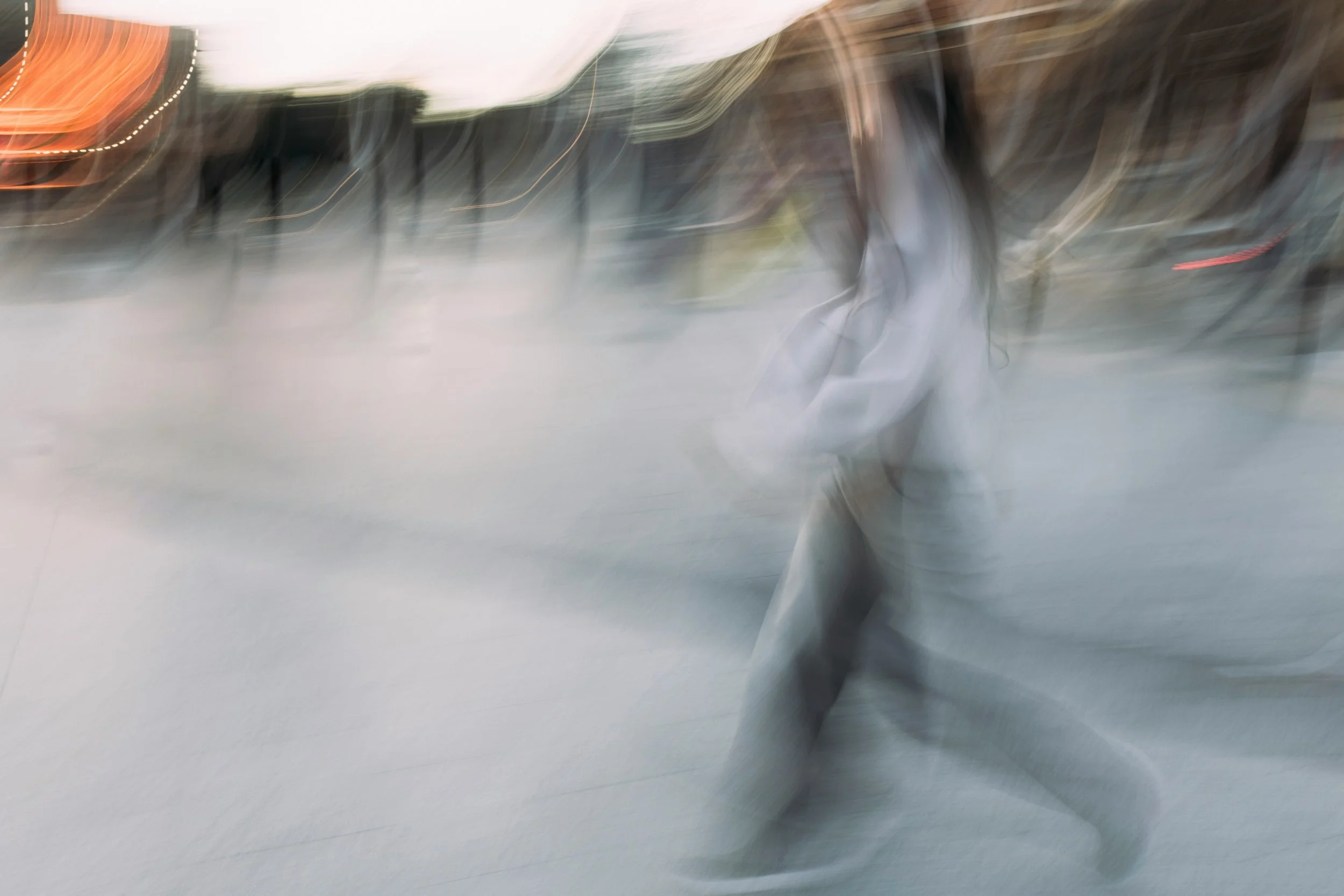
Photo by Elena Helade from Unsplash
There are entire sections of my day where my body sprints even though nothing is actually on fire. This is a look at three of those places in daily life - spaces where rushing has become habitual, not necessary.
What happened
Today unfolded like many other days on autopilot.
The morning started with a jump: waking up and immediately checking the time, as if the clock might have betrayed me overnight. Even on a day with no hard deadline, the first instinct was to move quickly - grab the phone, scan notifications, mentally rehearse tasks while walking to the kitchen. The pace felt inherited rather than chosen.
Later, lunch came and went in a blur. The meal was assembled quickly, eaten while half thinking about the next block of work, the next message, the next obligation. There was no real reason to hurry - no train to catch, no appointment - but the way my body moved suggested there was.
By evening, even the transition to rest carried the same edge. Brushing teeth, scrolling a last round of updates, shuffling through the house to ‘get everything done’ before bed. The tempo of the outside world had gotten inside: three spaces of the day - morning, meals, and evenings - treated as corridors to rush through, instead of rooms to inhabit.
How I slowed it down
Named three ‘false emergency’ zones in the day: waking up, eating, and getting ready for bed.
Chose one tiny speed interrupt in each space: one action done at half‑pace, with full attention, just to feel what unhurried might be like.
Removed invisible timers: no phone check before getting out of bed, no clock watching during a ten minute meal, no last minute ‘one more thing’ sprint before sleep.
Let the body set the rhythm: walking more slowly down the hall, taking an extra breath before sitting, chewing fully, washing hands with deliberate movements.
Treated each of these spaces as a practice ground, not a performance: no need to ‘do it perfectly,’ only to notice how quickly habit tries to pull the pace back up.
What this space is teaching me
1. The morning rush that isn’t
The bedroom and bathroom in the first thirty minutes of the day quietly reveal how deeply rushing has been wired in. The body wakes and the mind bolts ahead: ‘What time is it? What am I behind on? What’s waiting for me?’ The floor is not a conveyor belt, but it is treated like one; each step is already leaning into the next.
When this space is slowed even slightly - lingering on the edge of the bed, noticing light and temperature, moving through washing and dressing without also checking messages - something unexpected happens. The day does not actually start later; it simply starts with the sense that the body and the clock are on the same page. The morning space teaches that the first pace of the day sets the tone: if the first act is a sprint, everything after it feels like ‘catching up,’ even when there is nothing to catch.
2. The meal that becomes a pit stop
The kitchen or dining area often turns into a fueling station rather than a place of presence. Food is prepared or ordered quickly, eaten standing by the counter or sitting near a screen, the mind already halfway into the next task. There may be no real constraint on time, yet the body behaves as if pausing to taste would be irresponsible.
When the meal is treated as a full stop instead of a pit stop - sitting down, putting the phone away, letting the hands rest between bites - time does not actually disappear. The same twenty minutes stretches; the nervous system receives a small message: ‘You are allowed to be here.’ This space teaches that nourishment is not measured only in calories or efficiency, but in how willing we are to grant ourselves a pocket of unhurried attention in the middle of the day.
3. The evening that races toward itself
The hallway, the bathroom, the living room at night can become a frantic closing ceremony. There is a familiar pattern: one more email, one more episode, one more chore before bed. The body moves faster in the name of ‘getting it over with,’ as though rest is a prize that must be earned by rushing all the way up to the edge of it.
When the tempo of evening tasks is softened - lights lowered 10-15 minutes earlier, teeth brushed without multitasking, the walk to bed approached like a small procession instead of a dash - sleep does not become instant, but the transition becomes kinder. This space teaches that rest is a rhythm, not a switch, and that hurrying into bed often means taking the day’s momentum under the covers.
How this ties to the core StarCozi concept of pace
One of the core philosophical threads in this work is that pace should match purpose. If a task is not truly urgent, the body does not need to move as if it is. The manifesto version of this is: ‘Not everything deserves your fastest self.’
These three spaces - waking, eating, resting - are perfect examples. They are structurally simple, rarely bound by true emergencies, yet they carry the nervous system load of much more intense moments. By slowing them first, the rest of life begins to fall into a more honest alignment: speed where it is truly needed, spaciousness where it is not. The home becomes the training ground where this principle is rehearsed, so it can eventually travel with you into the wider world.
Try this in your space
Choose one of these three spaces today and experiment with what happens when you refuse to rush where no rushing is needed.
Morning: Spend the first three minutes after waking without your phone. Sit on the edge of the bed, feel your feet on the floor, and move to the bathroom at half your usual speed.
Meal: Take one meal without any screens or reading material. Sit in one place, taste your food, and allow yourself to finish eating before planning what comes next.
Evening: Decide on a ‘last task’ thirty minutes before bed, and once it’s done, let every movement after that be slower: lights, washing, walking to bed.
Notice not only what changes in the clock, but what changes in you: how your shoulders sit, how your breath moves, how much of the day still feels like it belongs to you.
Where could your day move half a step slower?