✦ Who am I after my late ADHD diagnosis? A guide for women rebuilding their identity
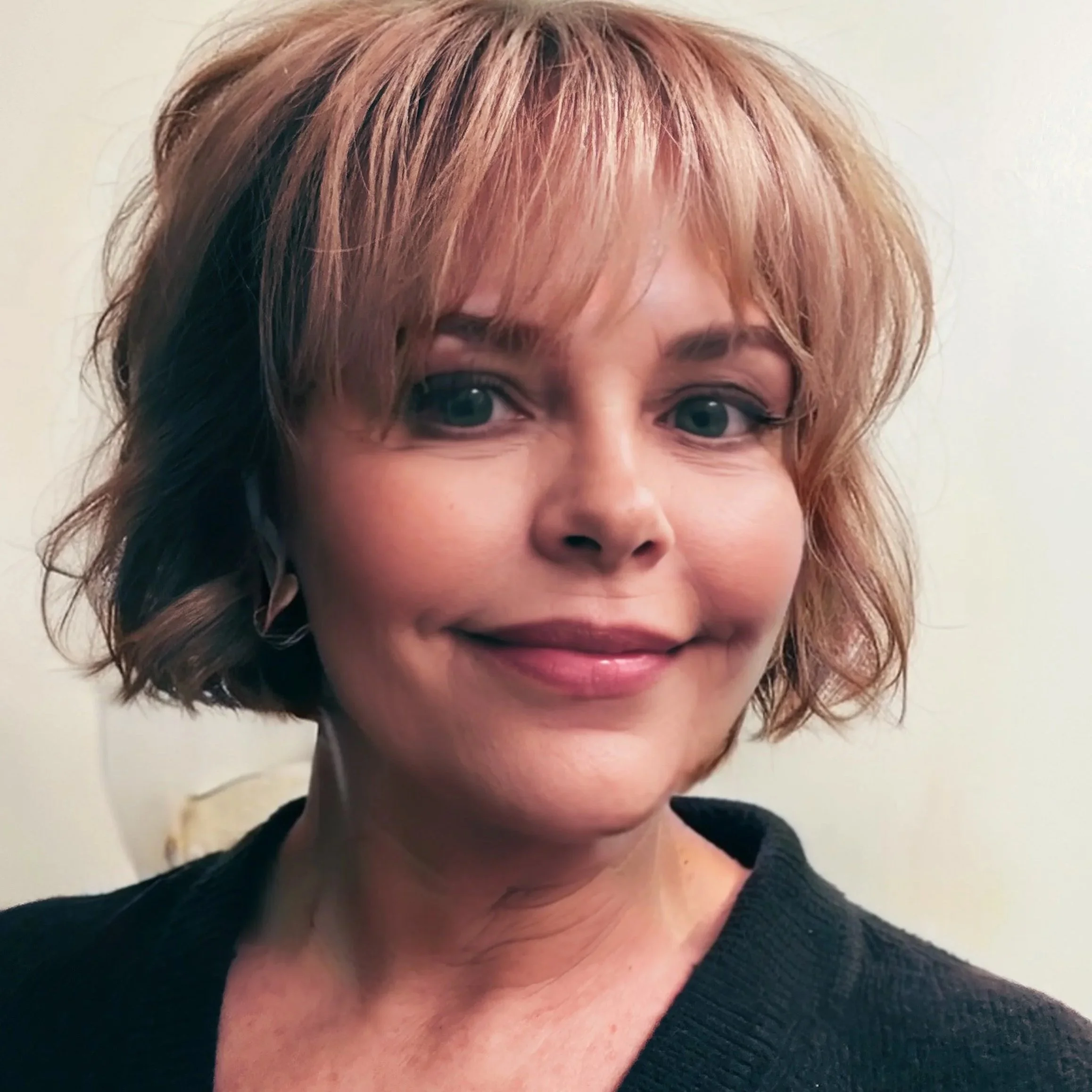
By Robin E. S. Carter, PhD | StarCozi.com
I earned a PhD in the dark. Raised four daughters alone. Climbed out of poverty. Survived what would have broken most. And still - the world called me too much. I wasn’t too much. I was just too deep for a world that never learned how to hold a woman like me. Now I build slowly. Live quietly. And finally completely refuse to shrink myself for anyone again. This is what it means to live StarCozi.
Late diagnosed ADHD. Finally. An explanation for the decades of exhaustion, the masking, the relentless feeling that you were living your life slightly out of sync with everyone around you - like a radio station almost tuned in but never quite clear.
You expected relief. And relief did come. But it brought something else with it that nobody warned you about.
Grief.
If you are sitting with both of those things right now - the relief and the grief - you are not broken. You are not ungrateful. You are a woman whose entire life just got rewritten in a single afternoon, and nobody gave you a manual for what comes next.
This is that manual.
The Identity Earthquake
A late ADHD diagnosis does not just explain your present. It retroactively rewrites your entire past.
Every job that felt harder than it should have. Every relationship where you gave everything and still felt like you were failing. Every room where you were the most intense person and learned to shrink yourself to make others comfortable. Every time someone called you too much, too sensitive, too deep and you believed them.
All of it gets reframed in an afternoon.
That is not a small thing. That is an identity earthquake. The ground underneath the story you have been telling about yourself for forty, fifty, sixty years shifts and everything built on top of it shifts with it.
I know this because I lived it. At 60, after decades of navigating a world that consistently told me I was too intense, too different, too everything, I finally had language for why. The diagnosis didn’t change who I was. It explained who I had always been. And the woman I had always been had spent a lifetime calling her neurology a character flaw.
That realization doesn’t land softly. It lands like an earthquake. And the aftershocks take time.
The Masking Years
Before you can understand who you are after your diagnosis, you have to be honest with who you became in order to survive before it.
Masking is the word the neurodivergent community uses for the exhausting performance of normalcy. The suppressing of natural responses. The mirroring of other people’s social cues. The learning, early and hard, that being yourself felt dangerous and that authenticity might mean rejection, misunderstanding, or worse.
I learned this in a small white farm town in Pennsylvania where a neurodivergent girl with ADHD had no framework, no language, and no support. What I had instead were adaptations - an anxious eagerness to please, a tendency to fill silences with too many words, a hypervigilance around rejection that consumed so much energy there was almost none left for actually connecting with people.
These weren’t character flaws. They were survival strategies. But survival strategies have a cost. The woman you performed so convincingly that she became automatic - she is not you. She is the armor. And underneath the armor, the real woman has been waiting, patient and exhausted, for someone to finally tell her it is safe to come out.
The masking years are not wasted years. But they do need to be grieved.
The Grief Nobody Talks About
This is the part the wellness industry skips. The part where someone hands you a diagnosis and expects you to pivot immediately into gratitude and growth.
But there is grief here. Real, legitimate, profound grief. And you are allowed to feel it without rushing past it toward the silver lining.
Grief for the years you spent in educational systems that were never designed for how your mind works. Grief for the relationships that fractured under the weight of being chronically misunderstood. Grief for the careers derailed, the opportunities missed, the version of yourself you might have become if someone had seen you clearly twenty years earlier.
Grief for the woman who depleted herself completely - financially, emotionally, physically - because she had been taught that her needs were less important than everyone else’s. Who raised four daughters alone, earned a PhD one dissertation page at a time, climbed out of poverty through sheer force of will, and still found a way to call herself inadequate.
I spent years apologizing for my circumstances instead of recognizing that what I had survived was nothing short of extraordinary. My neurodivergent brain, shaped by decades of criticism and hypervigilance, had internalized every harsh judgment until the external voices and the internal ones became indistinguishable.
You are allowed to mourn that. You are allowed to be angry about it. The diagnosis is not asking you to forgive everything overnight. It is asking you to finally see yourself accurately - and accuracy, after a lifetime of distortion, is its own kind of grief.
Sit with it. It is doing necessary work.
Who You Are Now
Here is what I want you to understand about the woman on the other side of this earthquake.
She is not starting over. She is starting correctly for the first time.
The intensity that was weaponized against you - the depth, the sensitivity, the refusal to skim the surface of anything - those are not liabilities to manage. They are the architecture of everything you are capable of building. The same hyperfocus that others labeled obsessive is exactly what carried you through everything you survived. The same pattern recognition that made social situations baffling made you extraordinary at understanding complex systems, at seeing what others miss, at thinking in ways that cannot be replicated by minds that only live on the surface.
You were not failing at being normal. You were succeeding at being something the world does not yet have a proper category for.
Living StarCozi - the philosophy I have spent years building and living - is rooted in this exact truth. That depth is not a disorder. That a tender nervous system is not a flaw in your design. That speed is not the answer and you operate at a different pace. That the woman you are becoming, slowly, honestly, on your own terms, is the most accurate version of yourself that has ever existed.
You do not need to be fixed. You need a life that finally fits who you actually are.
The Next Step
If this resonated somewhere deep - if you read the word grief and felt seen rather than corrected, you are in the right place.
StarCozi exists for women like you. Women with big inner worlds and tender nervous systems who are done performing a version of themselves that was always a costume. Women in the middle of the slow, courageous work of unmasking. Women who are ready to stop apologizing for how deeply they feel and how differently they think.
Start here or with my blog called The Comfort Zone - my ongoing exploration of identity, depth, and what it means to build a life that reflects who you actually are.
You have spent enough years in someone else’s story.
This is where you begin writing your own.
✦ Explore more at StarCozi.com
Robin E. S. Carter, PhD survived what would have broken most, earned a doctorate anyway, and built StarCozi for every woman who was always too deep for a world addicted to fast.