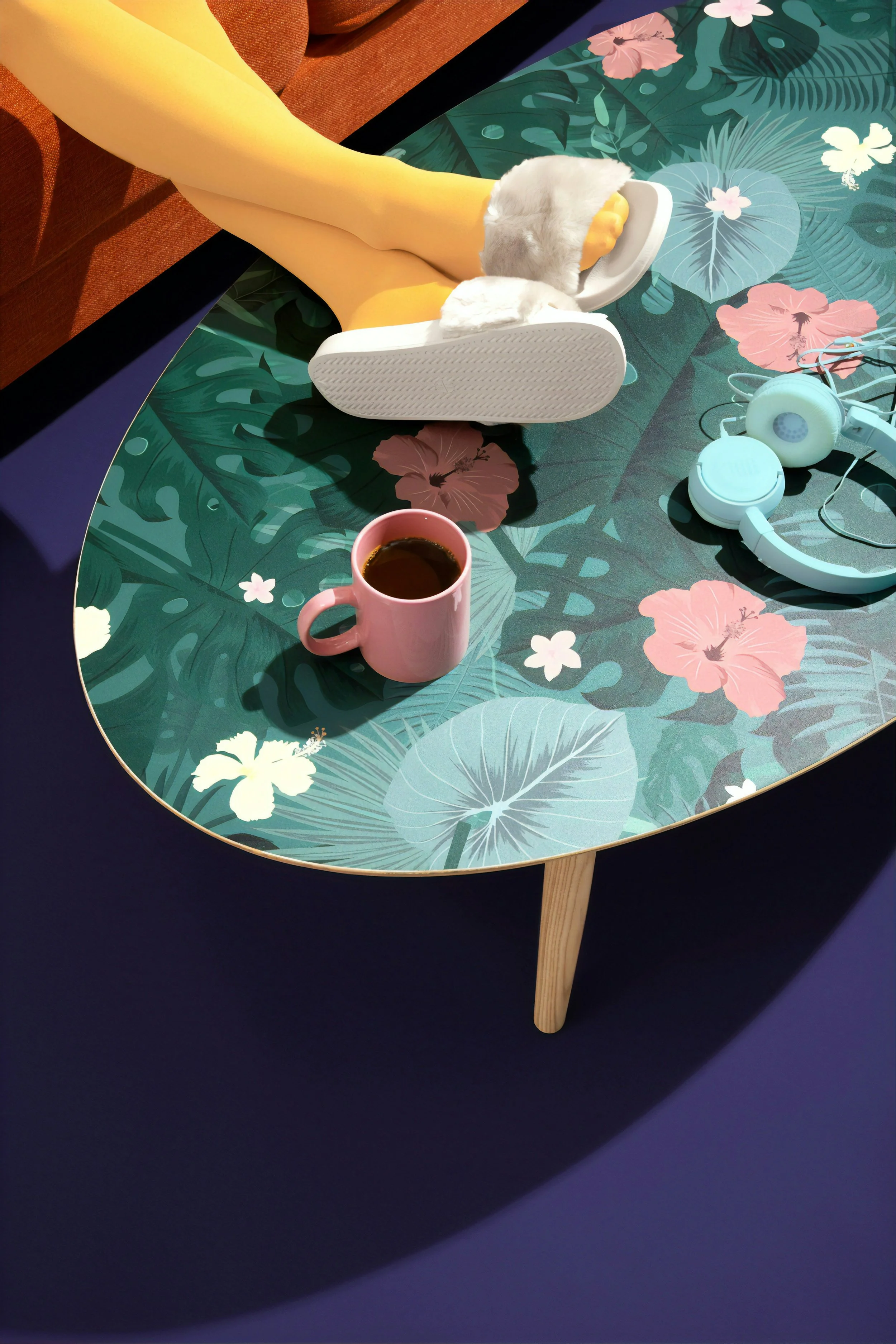
Photo by Inside Weather from Unsplash
There is a quiet lie woven through modern life: if you just buy the right things - softer sheets, smarter devices, better loungewear - comfort will finally arrive and stay. Yet real comfort has more to do with what you do with your space, your time, and your body than with what you own.
What happened
Picture a familiar loop.
A long, draining day ends with a sense of being frayed at the edges. The answer that presents itself is often a purchase: new candles to make evenings cozier, a better chair to ‘finally’ relax in, a streaming subscription to unwind. The package arrives, the item is unboxed, and for a few days there is a small lift. The new object feels like a promise: this will fix how I feel.
But slowly, the object blends into the background. The chair becomes just another place to scroll while stressed. The blanket is wrapped around a body that is still tense and half working. The candle burns while the mind races. Nothing is wrong with the things themselves; they simply cannot do the part that belongs to practice: slowing down, noticing the body, setting boundaries, and creating rituals that invite ease instead of more noise.
How I slowed it down
Shifted the question from ‘What can I buy to feel better?’ to ‘What small thing can I do differently in this space?’
Treated comfort as a series of repeatable actions: the way lights are dimmed, the way the phone is put away, the way the body is greeted when it comes home.
Used existing objects such as a chair, mug, blanket, lamp as tools to support comfort rituals, not as solutions on their own.
Practiced returning to the same simple comforts daily: one favorite corner, one warm drink, one short moment of stillness, even when the day felt too full.
Noticed how often discomfort came from pace, pressure, and overcommitting rather than from a lack of things.
What this space is teaching me
The home reveals the difference between comfort as aesthetic and comfort as lived experience.
A room can look cozy in a photo such as throws, cushions, soft lighting - and still feel restless when you sit down in it. If the laptop is always open, if notifications are always on, if the mind is always halfway through tomorrow’s to do list, the body never really gets to arrive. The objects play their part, but they cannot grant permission to rest; that permission has to be practiced.
Comfort as a practice looks like this:
Choosing a chair and deciding that, in the evening, it is a no work zone.
Turning on the same lamp at the same time each night to signal a shift from doing to unwinding.
Making the same simple drink and actually tasting it, instead of gulping it while multitasking.
Putting a blanket over your legs as a cue to stay put for ten minutes and just breathe or read.
Over time, these repeated actions teach the nervous system: ‘When we do this here, we soften.’ The comfort comes less from the blanket or the mug and more from the body recognizing a familiar, safe pattern.
There is also an uncomfortable truth tucked inside this: sometimes it feels easier to buy comfort than to change habits that keep us overextended. It is simpler to add a candle than to say no to one more commitment. But the kind of comfort that actually restores us almost always involves subtraction - less noise, fewer demands, gentler expectations of ourselves.
Try this in your space
Today, experiment with comfort as something you practice instead of something you acquire.
Choose one spot in your home: a corner of the couch, a chair by a window, a place at the table.
Decide on a tiny comfort ritual you will repeat there for the next week: five minutes with a warm drink, three pages of a book, a short stretch, or simply sitting quietly with the lights dimmed.
Use what you already have - a blanket, a mug, a lamp - as props, but let the action be the main event.
Each time you do it, notice how your body feels at the beginning and at the end, even if the change is small.
Let this be your reminder: comfort is less about finding the perfect object and more about returning, again and again, to a way of being in your space that tells your body, ‘You are allowed to soften here.’